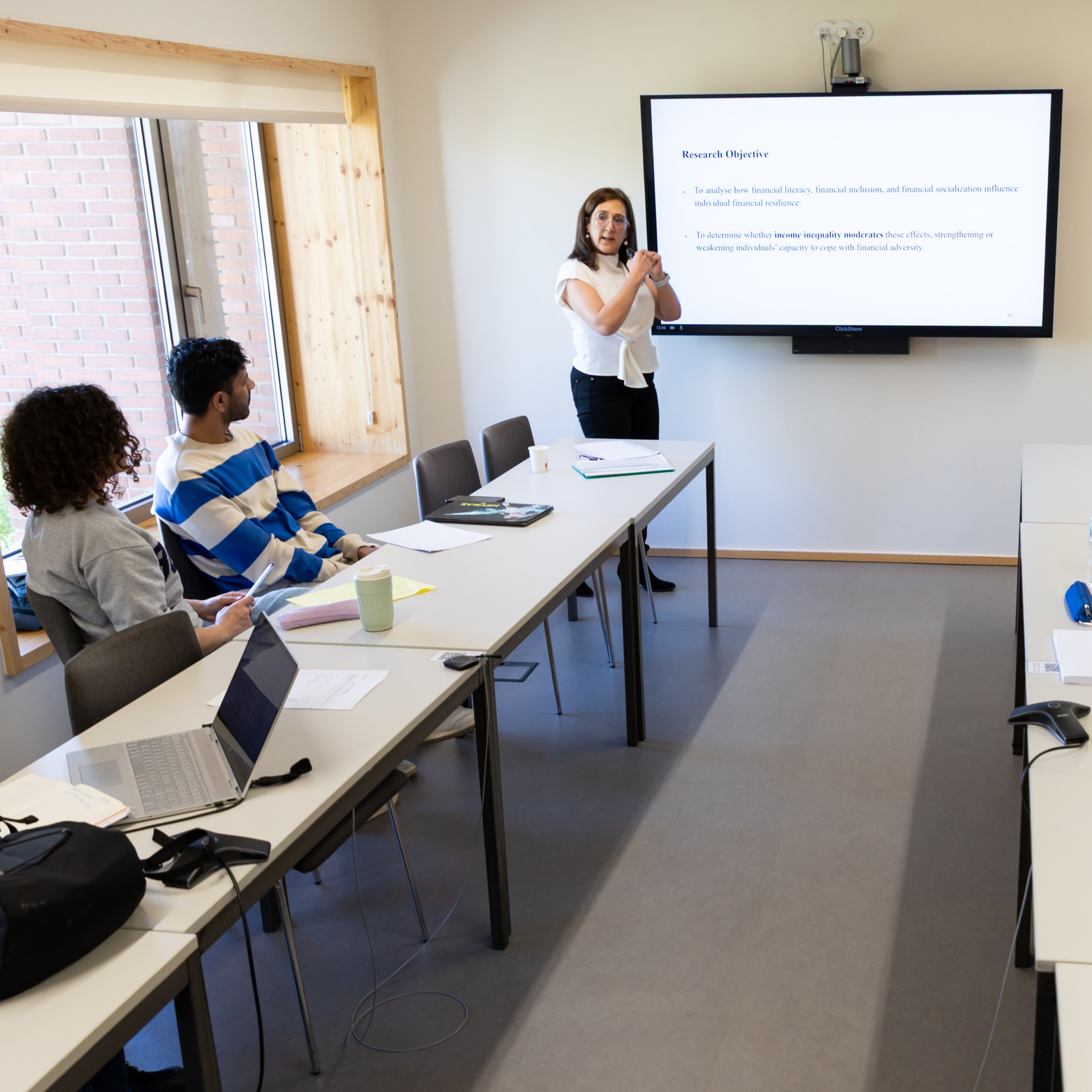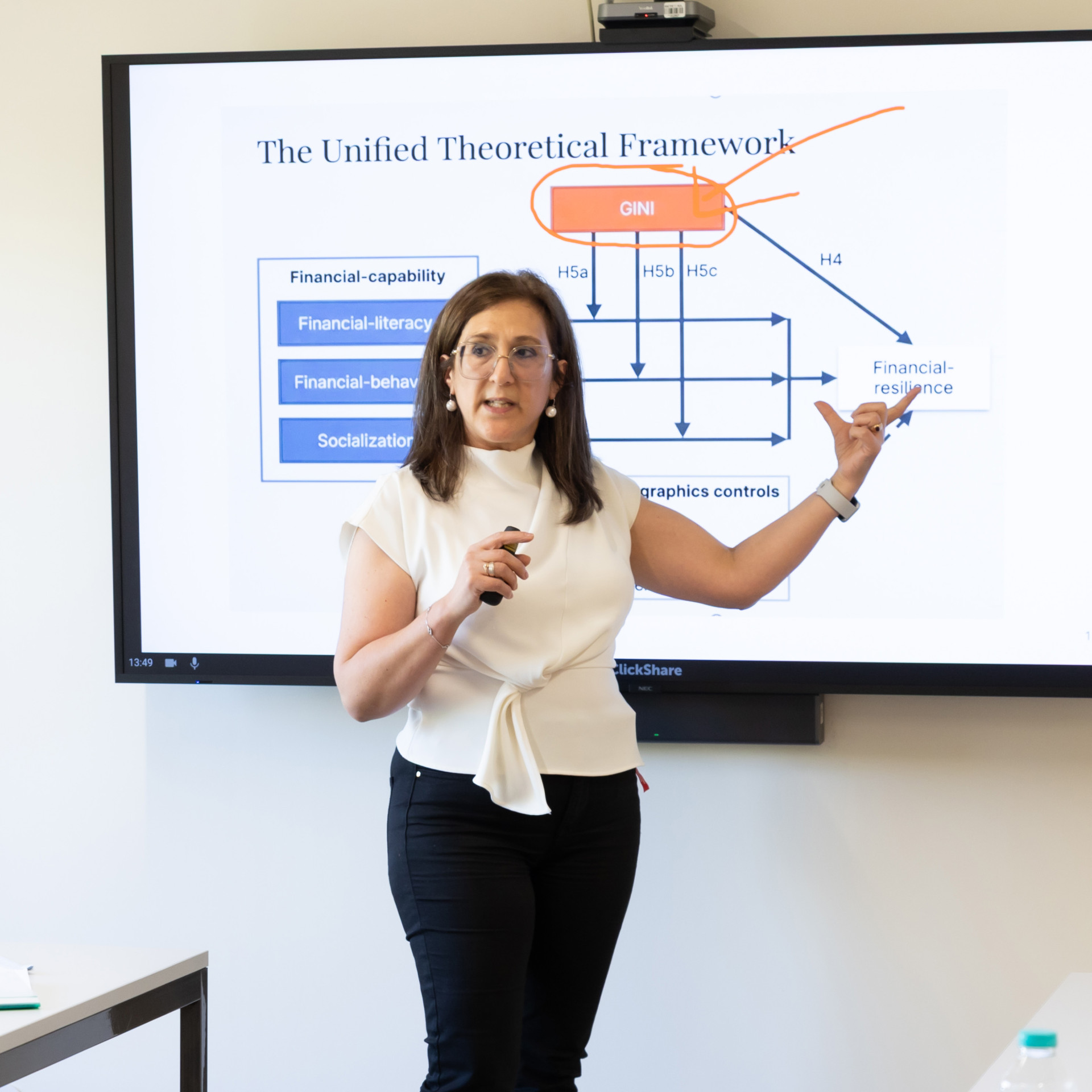

BRU Research Seminar: Ana Paula Matias Gama
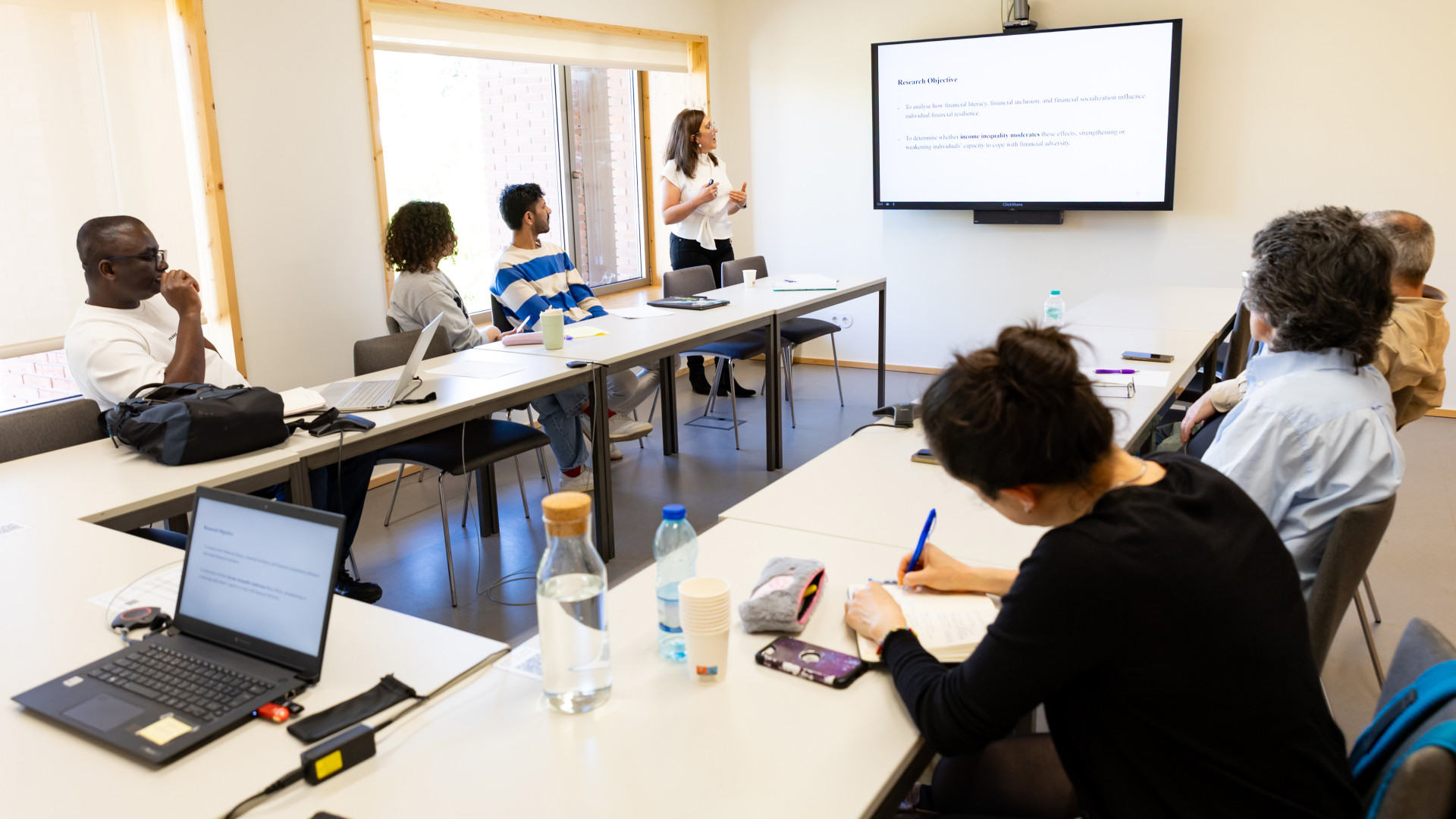
BRU Research Seminar: Ana Paula Matias Gama
On March 31, Ana Paula Matias Gama from the University of Beira Interior gave a BRU Research Seminar on the topic “Financial Resilience: Do Financial Capability and Income Inequality Matter?”. The session was chaired by BRU-Iscte researcher João Pedro Vidal Nunes.
Abstract:
The study examines the determinants of financial resilience using Sherraden’s financial capability framework. Drawing on data from 10,245 individuals across ten countries from the OECD/INFE 2020 International Survey of Adult Financial Literacy, we analyze the roles of financial literacy, financial inclusion, and socialization, alongside the moderating effect of income inequality. Results indicate that financial literacy and inclusion significantly enhance resilience, while socialization shows mixed effects, particularly under high inequality contexts. Income inequality consistently reduces resilience and attenuates the benefits of literacy and inclusion, underscoring structural constraints on individual capabilities. Disaggregated analysis reveals heterogeneous impacts across six resilience dimensions, with literacy strongly linked to fraud awareness and inclusion in savings and coping strategies. Sociodemographic factors such as education and employment further shape outcomes. These findings highlight the interplay between individual capabilities and contextual conditions, offering insights for policy interventions aimed at fostering financial resilience globally.